
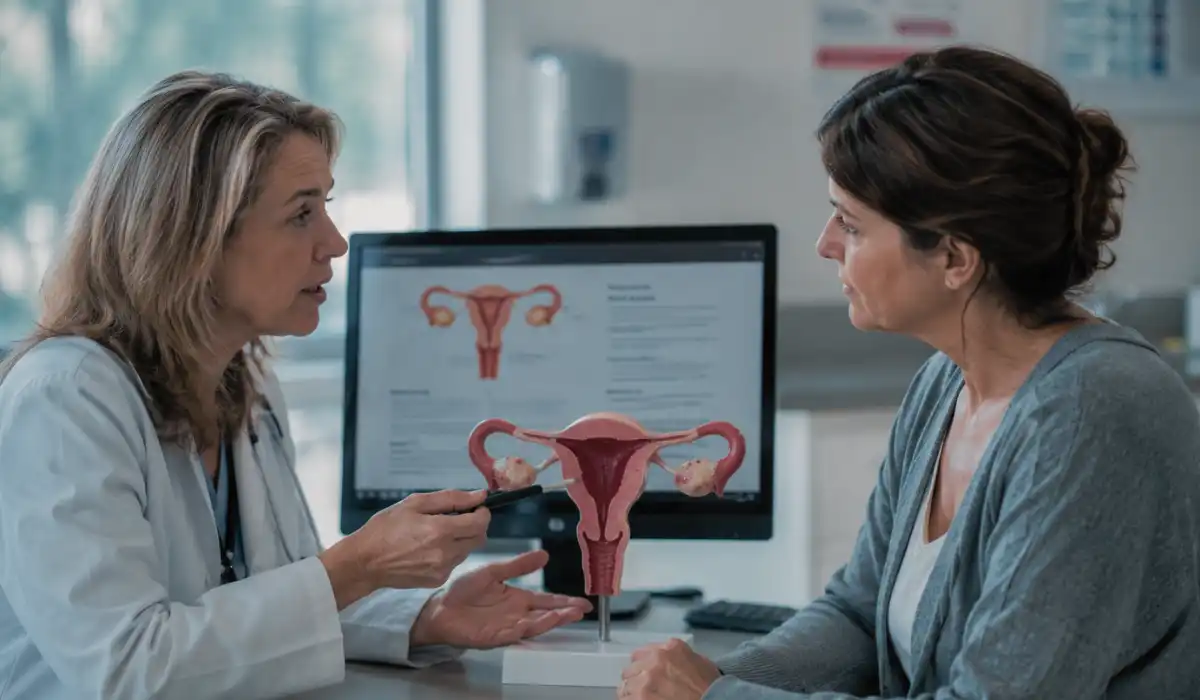
A hysterectomy stops periods and prevents pregnancy, but it does not always cause menopause. Menopause begins immediately only if both ovaries are removed.
When both ovaries are removed before natural menopause, hormone production drops suddenly. This causes surgical menopause, which may begin immediately after the operation. Understanding which organs are included in the procedure can help someone prepare for possible hormonal changes.
What Happens During a Hysterectomy?
A hysterectomy is an operation that removes the uterus. After the procedure, menstrual periods stop because there is no uterine lining to shed. Pregnancy is also no longer possible.
The ovaries and fallopian tubes are separate organs. They may be removed during the operation, but they are not automatically taken out with every hysterectomy.
The term total hysterectomy means that the uterus and cervix are removed. It does not necessarily mean that the ovaries are removed. Patients should ask their surgeon to list exactly which organs will remain.
What Happens When the Ovaries Remain?
When one or both ovaries remain, they can continue releasing estrogen, progesterone and other hormones. Menstrual bleeding stops because the uterus is gone, but ovarian hormone production may continue until natural menopause.
This can make menopause harder to identify. A person can no longer use 12 months without a period as a clear sign because periods stopped after surgery rather than because of menopause.
Instead, menopause may be recognised through symptoms, age, medical history and, in some situations, blood tests. Hot flashes, night sweats, vaginal dryness and sleep changes may suggest that ovarian hormone production is declining.
A partial hysterectomy removes the upper part of the uterus while leaving the cervix in place. It does not automatically remove the ovaries, so hormone production may continue and immediate menopause usually does not occur.
Can Menopause Begin Earlier After Surgery?
A hysterectomy without ovary removal does not normally trigger immediate surgical menopause. However, some people may experience natural menopause earlier than they would have without the operation.
The exact timing cannot be predicted for an individual. Age, ovarian function before surgery, blood supply to the ovaries and other health factors may influence when menopause begins.
New symptoms do not always mean the ovaries have stopped working. Recovery from surgery, medication, stress, disturbed sleep and temporary hormonal changes can produce similar problems.
What Is Surgical Menopause?
Surgical menopause happens when both ovaries are removed before natural menopause. The operation to remove both ovaries is called a bilateral oophorectomy.
Because the ovaries are a major source of estrogen and progesterone, removing them causes a sudden hormone decline. Symptoms may begin soon after surgery instead of developing gradually over several years.
Possible surgical menopause symptoms include:
- Hot flashes and night sweats
- Vaginal dryness or discomfort during sex
- Sleep problems
- Mood changes or anxiety
- Reduced sexual desire
- Difficulty concentrating
- Joint or muscle discomfort
The intensity varies. Some people experience strong symptoms, while others notice only mild changes.
Does Removing One Ovary Cause Menopause?
Removing one ovary does not usually cause immediate menopause when the remaining ovary continues functioning. It may still produce enough hormones to support normal ovarian activity.
However, menopause timing varies between individuals. Anyone who develops persistent hot flashes, night sweats, vaginal dryness or other hormonal symptoms should discuss them with a gynecologist.
How Is Menopause Managed After a Hysterectomy?
Treatment depends on the symptoms, age, health history and reason for surgery. Hormone therapy may be considered after ovary removal to relieve symptoms and protect bone health, particularly when surgical menopause occurs before the usual menopausal age.
Hormone therapy is not suitable for everyone. A clinician should consider cancer history, blood-clot risk, cardiovascular health and other medical factors before recommending treatment.
Nonhormonal medicines may help with hot flashes or mood symptoms. Vaginal moisturisers, lubricants and certain local treatments may help with vaginal dryness or painful sex.
Regular physical activity, adequate calcium and vitamin D, not smoking and limiting alcohol can also support bone and cardiovascular health after menopause.
When to Contact a Healthcare Professional?
Arrange an appointment when menopausal symptoms interfere with sleep, work, relationships or daily comfort. Medical advice is also helpful when symptoms begin suddenly after surgery and it is unclear whether the ovaries were removed.
Seek prompt care for heavy bleeding, worsening pelvic pain, fever, foul-smelling discharge, chest pain, breathing difficulty or painful swelling in one leg. These may indicate a surgical complication rather than menopause.
Any bleeding that begins after recovery should also be evaluated. Even after hysterectomy, ongoing gynecologic care may still be needed for pelvic health, menopausal symptoms and cervical screening when the cervix remains.
Final Thoughts
A hysterectomy does not automatically cause menopause. Immediate surgical menopause occurs when both ovaries are removed. When the ovaries remain, they usually continue making hormones, although menopause may sometimes arrive earlier.
Before surgery, ask whether the ovaries, fallopian tubes and cervix will be removed. This information makes it easier to understand expected changes, recognise symptoms and discuss appropriate treatment.
FAQs
No. Immediate menopause generally occurs only when both ovaries are removed. When the ovaries remain, hormone production often continues until natural menopause develops.
Periods stop because the uterus and its lining have been removed. The ovaries may still release hormones, but there is no uterine lining to bleed.
Doctors consider symptoms, age, medical history and whether the ovaries remain. Blood tests may occasionally help, although hormone levels can naturally fluctuate during perimenopause.
Not necessarily. A total hysterectomy removes the uterus and cervix. Ovary removal is a separate procedure that should be clearly discussed before surgery.
Yes. When the ovaries remain, natural menopause may develop later. Symptoms can include hot flashes, night sweats, vaginal dryness, sleep changes and mood concerns.
Not everyone needs hormone therapy, but it may help symptoms and bone health. Suitability depends on age, health history, cancer risk and personal preferences.