
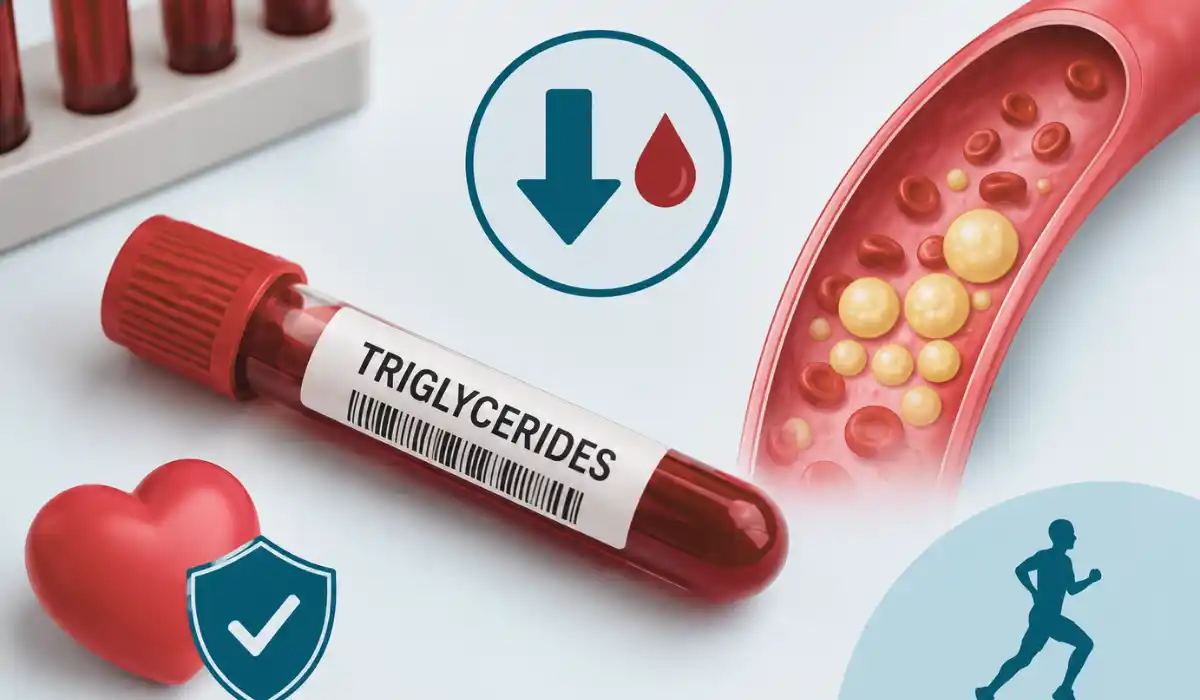
Low triglyceride levels are often harmless, but very low readings may point to diet, thyroid, absorption, or genetic issues. The wider health picture helps show whether further testing is needed.
What Counts as a Low Triglyceride Level?
Normal triglycerides fall below 150 mg/dL, and clinicians often call anything under 100 mg/dL optimal, a threshold SiPhox Health flagged in a 2025 report. The picture flips at the bottom of the scale. Most labs treat the below 50 mg/dL low threshold as the point where a result stops looking healthy and starts looking like a question.
Triglyceride levels below 50 mg/dL are generally considered low. Levels under 100 mg/dL are optimal, while 150 to 199 mg/dL is borderline high and 200 mg/dL or above is high.
So what’s considered a dangerously low triglyceride level? There’s no fixed cutoff, but readings under 40 mg/dL are the ones that tend to prompt a closer look, especially when other lab values are off.
What Causes Low Triglycerides?
The most common answer is diet. People eating very low-fat or low-calorie diets, whether by choice or circumstance, will often push their numbers down. Endurance athletes see it too. Those are benign explanations, and they account for a large share of quiet results.
The other explanations are the ones that matter more. Malnutrition is a leading medical driver, and it doesn’t only mean someone is underfed. It can mean the body isn’t absorbing what it takes in. That’s where malabsorption disorders such as celiac disease or chronic pancreatic problems enter the story, because fat that never gets absorbed never becomes circulating triglyceride.
Hyperthyroidism deserves its own line among low triglycerides causes. An overactive thyroid speeds metabolism and burns through lipids faster, and a suppressed triglyceride reading is sometimes the first clue on a routine panel. Genetic conditions like hypobetalipoproteinemia round out the list. In these inherited disorders the body can’t make certain lipoproteins normally, so triglycerides run low from birth. People with type 1 diabetes in tight metabolic control can also show lower readings, which is generally a marker of good management rather than a problem.
Symptoms of Low Triglycerides
Here’s the honest part. In most cases there are no direct symptoms of low triglycerides at all. The number itself doesn’t make a person feel unwell.
When symptoms do appear, they belong to the underlying cause. Someone with hyperthyroidism may notice weight loss, a racing heart, or heat intolerance. A person with malabsorption might report greasy stools, fatigue, or unexplained weight loss. I’ve seen this pattern come up again and again in practice: the triglyceride figure is a signpost, not the disease.
Health Risks Linked to Low Triglycerides
Can low triglycerides be a sign of a serious health problem? Yes, though not because the low number harms the body on its own. The risk lives in what’s causing it. Very low triglyceride levels under 40 mg/dL can indicate malnutrition, hyperthyroidism, or genetic conditions, as SiPhox Health noted in 2025, and each of those carries its own consequences if left unaddressed.
Prolonged malnutrition weakens immunity and muscle. Untreated hyperthyroidism strains the heart and bones. An inherited lipid disorder may affect fat-soluble vitamin status over years. None of that is caused by the low reading, but the reading is what brings it to attention.
Low Triglycerides With High LDL Cholesterol
This combination confuses people, and reasonably so. Is it bad to have low triglycerides and high cholesterol? It can be, someone can post enviable triglyceride numbers while still carrying high, plaque-forming LDL. I’ve reviewed panels like this myself, and it’s a reminder that the two numbers are separate risk levers.
Particle size adds nuance. Low triglycerides tend to favor larger, buoyant LDL-A particles rather than the small, dense LDL-B particles associated with plaque. That’s a modest point in the person’s favor. Even so, high LDL cholesterol with low triglycerides still warrants attention. Anyone in this pattern benefits from an ApoB or particle test rather than reassurance based on the triglyceride line alone, and the goal remains steady heart disease risk reduction over time.
How Low Triglycerides Are Diagnosed?
A standard blood lipid panel test measures triglycerides alongside total, LDL, and HDL cholesterol. Fasting for 9 to 12 hours gives the most reliable triglyceride figure, since a recent meal inflates the result.
A single low reading rarely means much. Clinicians usually repeat the blood lipid panel test and then look for context: thyroid function, celiac screening, and a nutritional history. That’s how hypotriglyceridemia gets sorted into harmless versus meaningful.
Treatment and When to See a Doctor?
Treatment targets the cause, never the number. How to raise low triglyceride levels depends entirely on why they dropped. For someone eating too little fat, the fix is dietary: adding healthy fats from olive oil, nuts, avocado, and fatty fish. hyperthyroidism, treating the thyroid usually restores lipids. For malabsorption, the underlying gut condition takes priority.
A person should see a doctor when a reading sits under 40 mg/dL, when it comes with weight loss or digestive trouble, or when high LDL rides alongside it. In our testing of what actually gets patients answers, those are the scenarios where knowing how to raise triglycerides matters less than diagnosing what pulled them down.
Key Takeaways
Low triglyceride levels are usually not a disease in themselves. They’re a clue. A number below 50 mg/dL can mean a lean diet and strong metabolic control, or it can mean the body is missing fuel, running its thyroid too hot, or carrying an inherited lipid quirk.
The value of the reading lies in the questions it prompts, and the answer nearly always comes from the wider picture rather than the single line on the report.
FAQs
There’s no official minimum, but readings under 40 mg/dL are the ones clinicians investigate, particularly alongside other abnormal labs.
Common causes include very low-fat or low-calorie diets, malnutrition, malabsorption, hyperthyroidism, and genetic conditions like hypobetalipoproteinemia.
They can, indirectly. The low number may reveal an underlying issue such as thyroid disease or poor nutrient absorption that needs treatment.
It can be. High LDL cholesterol raises cardiovascular risk regardless of the triglyceride figure, so the LDL should be assessed on its own.
By adding healthy fats such as olive oil, nuts, and fatty fish, and by treating any underlying condition driving the levels down.
Yes. Fasting 9 to 12 hours before a blood lipid panel gives a more accurate triglyceride reading, since food temporarily raises the number.
Reference
- MedlinePlus – Triglycerides Test
Explains lipid-panel testing, preparation, and how triglyceride results are interpreted. (MedlinePlus) - MedlinePlus – Triglycerides
Reviews triglyceride levels, blood testing, risk factors, and lifestyle management. (MedlinePlus)