
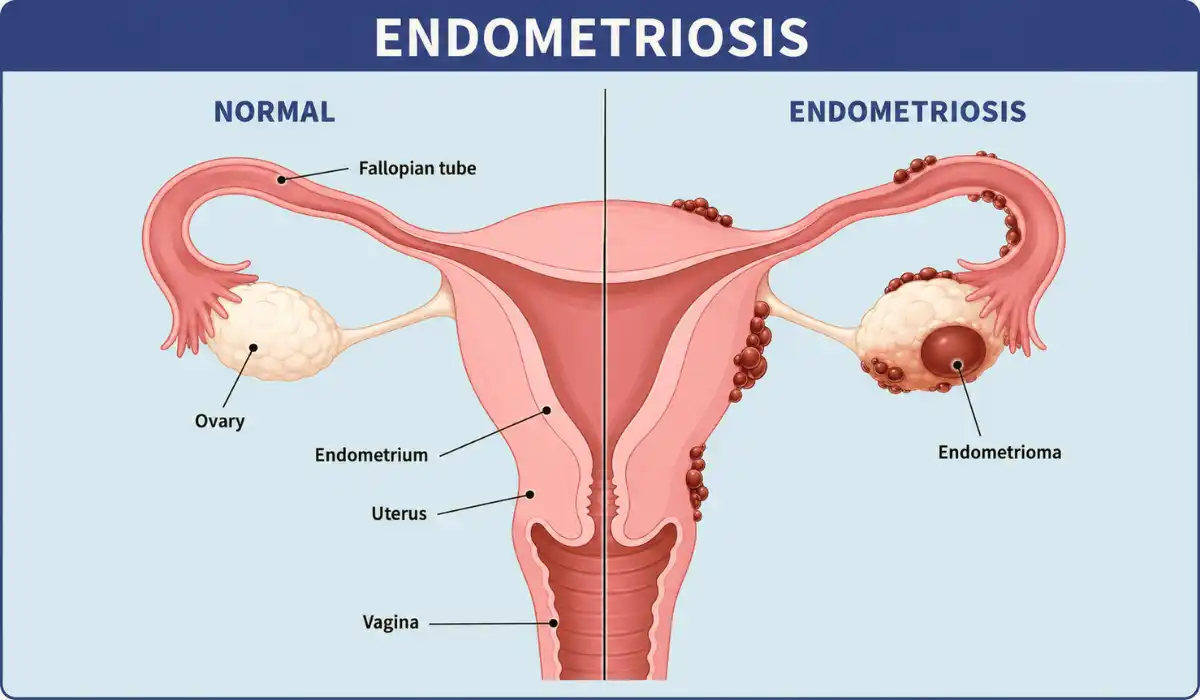
A hysterectomy does not always cure endometriosis. Removing the uterus stops menstrual periods and may reduce heavy bleeding, cramping, and some pelvic pain. However, because endometriosis usually develops outside the uterus, symptoms can continue if lesions remain elsewhere in the pelvis.
Lesions can remain on the ovaries, bladder, bowel, pelvic lining, ligaments, or nearby nerves after surgery. For this reason, major endometriosis guidelines state that hysterectomy does not guarantee that the disease or its symptoms will disappear completely.
Why Hysterectomy Is Not a Guaranteed Cure?
Endometriosis involves tissue similar to the uterine lining growing in places where it does not belong. A hysterectomy removes the uterus, but it does not automatically remove disease located elsewhere in the pelvis. Endometriosis after hysterectomy can occur when lesions remain on the ovaries, bowel, bladder, pelvic lining, or other tissues outside the uterus.
Symptoms can continue when visible or microscopic lesions remain after surgery. Scar tissue, pelvic floor tension, bladder conditions, bowel disorders, and nerve sensitivity can also cause pelvic pain that feels similar to endometriosis.
A partial hysterectomy removes the uterus but leaves the cervix, while endometriosis lesions outside the uterus may remain and continue causing symptoms.
When Can a Hysterectomy Provide Relief?
A hysterectomy can provide significant relief when pain is closely connected to the uterus. It may be particularly helpful when endometriosis occurs alongside adenomyosis, a condition in which endometrial-like tissue grows within the muscular wall of the uterus.
Doctors may discuss hysterectomy when:
- Chronic pelvic pain severely affects daily life.
- Hormonal treatment has not provided enough relief.
- Previous conservative surgery has not worked.
- Heavy bleeding or adenomyosis is also present.
- The person does not want to carry a future pregnancy.
Hysterectomy is major and permanent surgery. It is generally considered after less invasive treatment options have been tried and the expected benefits outweigh the surgical risks.
Why Removing Visible Lesions Matters?
Removing the uterus alone may leave endometriosis behind. NICE recommends excising all visible endometriotic lesions when a hysterectomy is performed for the condition.
A surgeon may need to examine the ovaries, pelvic lining, bladder, bowel, ureters, and surrounding tissues. Deep endometriosis involving major organs often requires a specialist team with experience in complex pelvic surgery.
Even careful surgery may not remove every microscopic lesion. Patients should therefore receive realistic information about possible pain relief, recurrence, recovery, and the potential need for further treatment.
Does Removing the Ovaries Prevent Recurrence?
A hysterectomy does not automatically remove the ovaries. When the ovaries remain, they continue producing hormones that can stimulate endometriosis left behind.
Removing both ovaries can reduce the likelihood of future endometriosis-related pain, but it still does not provide a guaranteed cure.
Ovary removal before natural menopause causes immediate surgical menopause. Possible effects include hot flashes, vaginal dryness, sleep problems, mood changes, and longer-term concerns involving bone and heart health. The decision should consider age, symptoms, medical history, recurrence risk, and the possible need for hormone therapy.
Symptoms That Can Continue After Surgery
Possible signs of remaining endometriosis include:
- Persistent or recurring pelvic pain
- Lower abdominal or back pain
- Pain during or after sex
- Painful bowel movements
- Bladder pain or painful urination
- Bloating or digestive changes
- Pain that follows a monthly pattern when the ovaries remain
Returning pain does not always mean that endometriosis has grown back. Adhesions, pelvic floor dysfunction, irritable bowel syndrome, painful bladder syndrome, and other conditions can cause similar symptoms.
Unexpected bleeding after a total hysterectomy also requires medical evaluation. Vaginal dryness, scar tissue, infection, or another gynecological condition may be responsible.
Treatment Options Before or After Hysterectomy
Treatment depends on symptom severity, disease location, previous care, fertility goals, and whether the ovaries remain.
Hormonal treatment
Hormonal contraceptives, progestogens, and medicines that suppress ovarian hormone production can reduce endometriosis-related pain for some people. They manage symptoms but do not permanently remove lesions.
Excision surgery
Laparoscopic excision removes visible endometriosis while preserving the uterus. It may be considered before hysterectomy or later when remaining lesions continue causing significant symptoms.
Supportive pain care
Anti-inflammatory medication, pelvic floor physical therapy, heat, gentle activity, and treatment for related bladder or bowel problems may form part of a broader pain-management plan.
Practical Safety and Preparation Tips
Before choosing surgery, ask whether imaging suggests adenomyosis, ovarian cysts, or deep endometriosis. Confirm whether the surgeon plans to remove visible lesions and whether the cervix, ovaries, or fallopian tubes will remain.
Keep copies of imaging, surgical notes, and pathology reports. A hysterectomy ICD-10 code may also show which reproductive organs were removed.
Before surgery, discuss fertility preservation options because hysterectomy permanently ends the ability to carry a pregnancy.
When to Seek Professional Help?
See a gynecologist when pelvic pain affects work, sleep, sex, exercise, bowel movements, or urination. Persistent bloating, unexplained bleeding, blood in the urine or stool, and worsening back pain also need evaluation.
After surgery, seek medical advice for fever, increasing abdominal pain, heavy bleeding, unusual discharge, vomiting, wound redness, or difficulty urinating. Sudden severe pain, fainting, breathing difficulty, or heavy bleeding requires urgent care.
Final Thoughts
A hysterectomy can substantially reduce endometriosis symptoms, especially when adenomyosis or severe uterine bleeding is also present. However, it should not be described as a certain cure.
The best outcomes depend on careful diagnosis, removal of visible lesions, consideration of ovarian preservation, and treatment of other possible pain sources. A consultation with an experienced endometriosis specialist can help clarify whether hysterectomy is appropriate.
FAQs
A total hysterectomy removes the uterus and cervix, but endometriosis can remain on the ovaries, bowel, bladder, pelvic lining, nerves, or other nearby pelvic tissues.
Keeping the ovaries allows continued hormone production, which can stimulate remaining endometriosis. However, removing both ovaries still does not guarantee that pelvic pain will disappear completely.
Endometriosis symptoms can return months or years later if lesions remain. Pain can also come from adhesions, pelvic floor problems, bladder conditions, or bowel disorders.
Hysterectomy is usually considered after medicines or conservative surgery have not helped, symptoms remain severe, and the person does not want to carry a future pregnancy.
Excision removes visible endometriosis while preserving the uterus. Hysterectomy removes the uterus and should be combined with removal of visible lesions when performed for endometriosis.
Seek urgent care for sudden severe pain, heavy bleeding, fainting, fever, repeated vomiting, breathing difficulty, or trouble urinating or passing stool normally after recent surgery.
Reference
- MedlinePlus: Hysterectomy: (MedlinePlus)