
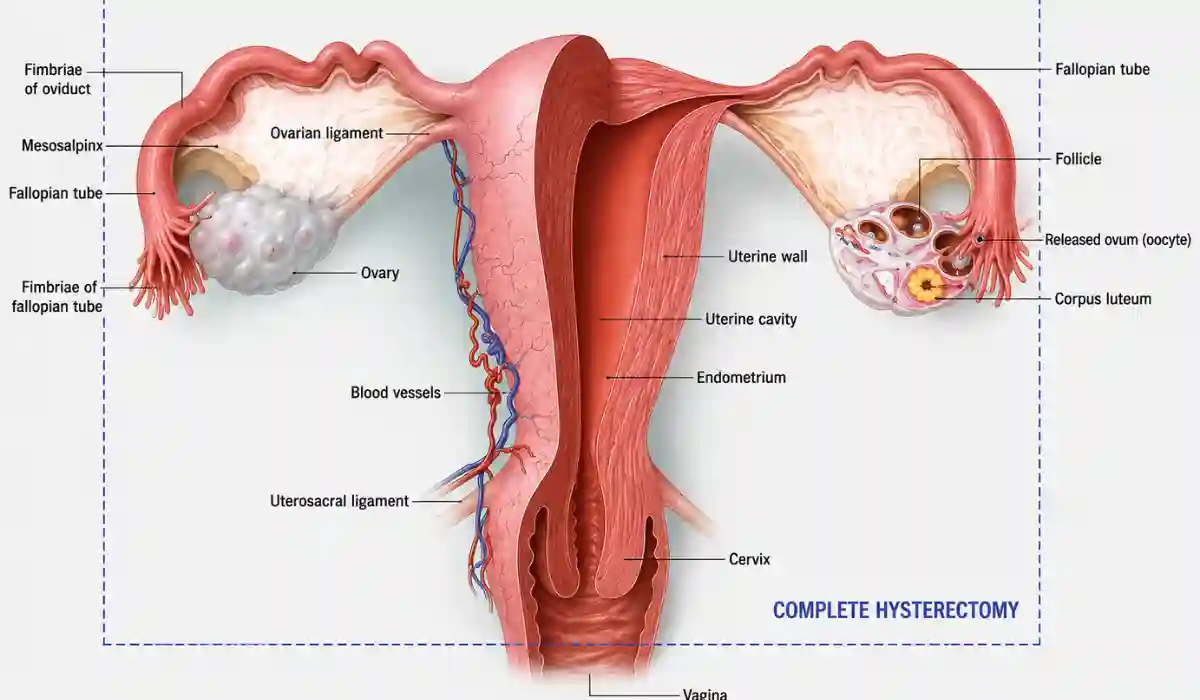
Endometriosis can still be present after a hysterectomy. Although the operation removes the uterus, endometrial-like tissue may remain on the ovaries, bladder, bowel, pelvic lining, or other nearby areas, allowing symptoms to continue or return later.
Some people experience major pain relief following a hysterectomy, while others continue to have symptoms or notice them returning later. Medical guidelines explain that hysterectomy does not guarantee a cure, especially when endometriosis outside the uterus is not completely removed.
Why Endometriosis Can Remain After Hysterectomy?
Endometriosis involves tissue similar to the uterine lining growing elsewhere in the body. Removing the uterus stops menstrual periods and prevents pregnancy, but it does not automatically remove lesions located outside the uterus.
Symptoms after surgery may represent:
- Endometriosis that remained after the operation
- Disease activity around the ovaries, bowel, bladder, or pelvic nerves
- Scar tissue or adhesions
- Pelvic floor muscle problems
- Another condition causing similar pelvic pain
A partial hysterectomy removes the main part of the uterus but leaves the cervix, while endometriosis lesions outside the uterus may remain and continue causing symptoms.
Does Keeping the Ovaries Affect Recurrence?
A hysterectomy does not always include removal of the ovaries. When one or both ovaries remain, they continue producing hormones and may continue ovulating until natural menopause.
Removing both ovaries before natural menopause causes immediate surgical menopause. Possible effects include hot flashes, vaginal dryness, sleep changes, and longer-term concerns involving bone health. The benefits and risks must therefore be considered carefully for each patient.
Possible Symptoms After Surgery
Endometriosis symptoms can differ depending on where the remaining lesions are located. Possible signs include:
- Persistent or returning pelvic pain
- Lower abdominal or back pain
- Pain during or after sex
- Painful bowel movements
- Bladder pain or discomfort during urination
- Bloating, constipation, or bowel changes
- Fatigue
- Pain that follows a monthly pattern when the ovaries remain
Deep endometriosis affecting the bowel, bladder, ureter, or pelvic nerves may produce symptoms that are easily mistaken for digestive, urinary, or muscular problems. Bleeding after hysterectomy is not always caused by endometriosis and should be evaluated for vaginal dryness, scar tissue, infection, or another gynecological condition.
Unexpected vaginal bleeding after a total hysterectomy also needs medical evaluation. Bleeding may come from vaginal dryness, scar tissue, infection, the urinary tract, or another gynecological condition rather than endometriosis.
How Doctors Investigate Returning Symptoms?
A gynecologist will review the original diagnosis, operative report, pathology results, and whether the ovaries and cervix were removed. Describing the timing, location, severity, and triggers of pain can also help narrow down the cause.
A transvaginal ultrasound can identify ovarian endometriomas, deep endometriosis, and other pelvic conditions. Pelvic MRI may be recommended when bowel, bladder, ureter, or deep tissue involvement is suspected. However, a normal scan does not completely rule out endometriosis.
Pelvic pain after hysterectomy can have several causes, doctors may also check for Pelvic Congestion Syndrome, bladder disorders, bowel conditions, adhesions, or pelvic floor dysfunction.
Laparoscopy may sometimes be considered when symptoms remain severe despite normal imaging or when surgery is needed to treat suspected lesions. Other causes of pain, including adhesions, bladder disorders, bowel conditions, and pelvic floor dysfunction, should also be assessed.
Treatment Options After Hysterectomy
Treatment depends on symptom severity, lesion location, whether the ovaries remain, previous therapies, and the person’s overall health.
Hormonal treatment
When the ovaries remain, hormonal medicines may help reduce pain by limiting hormonal stimulation of remaining endometriosis. Options can include progestogens, combined hormonal medication, or medicines that suppress ovarian hormone production.
Pain and pelvic floor care
Anti-inflammatory pain medicine may help some people. Pelvic floor physical therapy can also be useful when tight or painful muscles contribute to discomfort during sex, bowel movements, exercise, or daily activities.
Further surgery
Excision surgery may be considered when imaging or symptoms suggest remaining disease. Deep endometriosis involving the bowel, bladder, or ureter should be managed by a specialist team with appropriate surgical experience.
Repeat surgery is not automatically the best choice. Possible benefits must be weighed against scar tissue, organ injury, recovery time, and the chance that pain has more than one cause.
Practical Tips for Managing Symptoms
There is no guaranteed way to prevent endometriosis from remaining or recurring after hysterectomy. However, careful follow-up can support earlier treatment and better symptom control.
Keep a record of pelvic pain, bowel changes, urinary symptoms, fatigue, bleeding, and pain during sex. Note whether symptoms follow a monthly pattern and whether certain foods, movements, or activities make them worse.
Ask for a copy of your original surgery and pathology reports. These documents can show where endometriosis was found, whether visible lesions were removed, and whether the ovaries remain.
Follow prescribed treatment consistently, attend gynecology appointments, and avoid unproven supplements that claim to cure endometriosis. Seek a second opinion from an endometriosis specialist when symptoms remain severe or involve the bowel, bladder, or urinary tract.
When to Seek Professional Help?
Arrange an appointment when pelvic pain returns, worsens, or affects sleep, work, sex, exercise, bowel movements, or urination. Persistent bloating, unexplained bleeding, blood in the urine or stool, and recurring lower back pain also require a pelvic pain evaluation.
Seek urgent care for sudden severe pelvic pain, heavy bleeding, fainting, fever, repeated vomiting, breathing difficulty, or an inability to urinate or pass stool normally. These are important gynecological emergency warning signs.
Final Thoughts
Endometriosis can remain or become active again after a hysterectomy because the condition develops outside the uterus. Keeping the ovaries and leaving visible or microscopic lesions behind can increase the chance of continuing symptoms.
However, returning pelvic pain does not always mean endometriosis. A specialist assessment can identify other possible causes and determine whether medication, pelvic floor therapy, imaging, or further surgery is appropriate.
FAQs
Yes. Endometriosis can remain after hysterectomy because lesions may be located outside the uterus. Symptoms can also return when residual disease remains active in nearby tissues.
Keeping the ovaries allows continued hormone production, which may stimulate remaining endometriosis. However, ovarian removal does not guarantee that all pain or disease will disappear.
Possible symptoms include pelvic pain, painful bowel movements, bladder discomfort, pain during sex, lower back pain, bloating, fatigue, or unexplained bleeding that needs medical evaluation.
Ultrasound or MRI can identify endometriomas and deep disease, but normal imaging does not completely rule out endometriosis. A specialist assessment may still be necessary afterward.
Treatment may include pain relief, hormonal medicine, pelvic floor therapy, or surgery to remove remaining lesions. The best option depends on symptoms and medical history.
Seek urgent care for severe or sudden pain, heavy bleeding, fainting, fever, vomiting, breathing difficulty, or inability to urinate or pass stool normally without delay.
Reference
MedlinePlus-(https://medlineplus.gov/ency/article/002915.htm)