
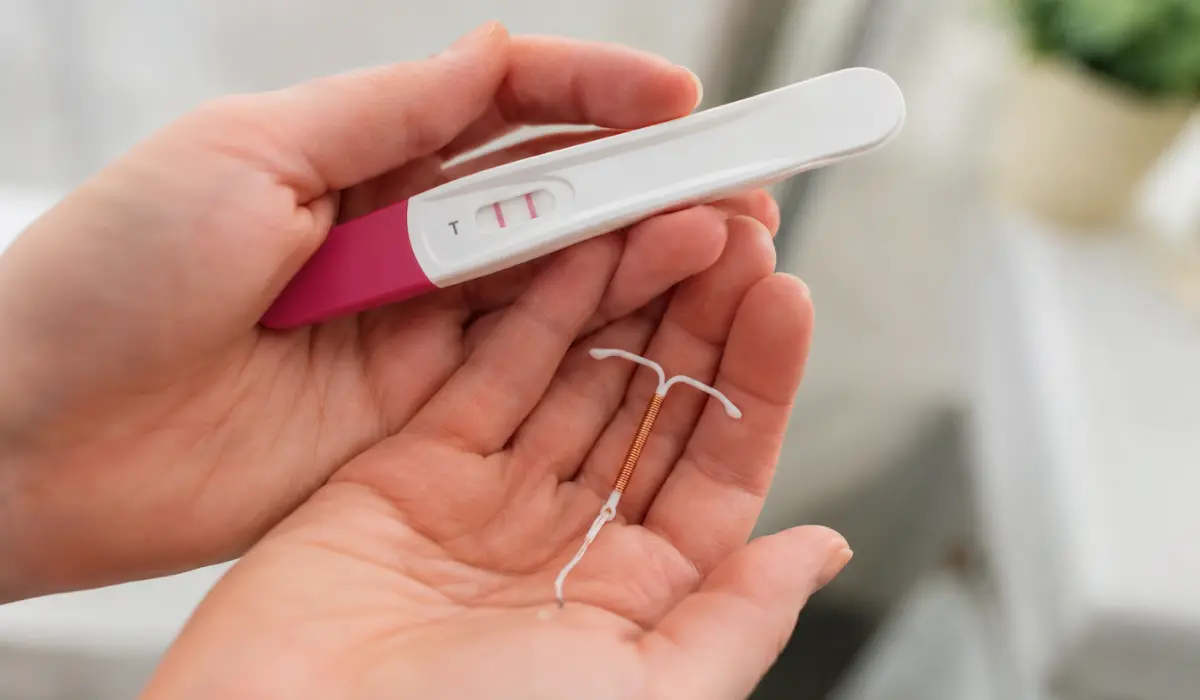
An IUD provides highly reliable birth control, although no method prevents pregnancy in every case. Both copper and hormonal IUDs are more than 99% effective. The risk may increase if the device is displaced, expelled, overdue for replacement, or not yet fully active.
How Likely Is Pregnancy With an IUD?
Fewer than one out of every 100 IUD users becomes pregnant during the first year. This makes an IUD one of the most reliable reversible birth control methods available.
No birth control method is perfect. The risk increases when the device is no longer positioned correctly or has been partially or completely expelled.
Why Can an IUD Fail?
The Device Moves or Comes Out
An IUD can occasionally shift lower in the uterus or come out through the cervix. This is called expulsion and is more likely during the first months after insertion.
You may notice longer or shorter strings, feel the hard plastic part, or see the device in your underwear. Some people notice no obvious symptoms.
The IUD Has Expired
Every device has an approved period of use. The duration depends on whether it is copper or hormonal and on the specific product.
Keep a record of the insertion and replacement dates. Contact the clinic if you are unsure when the device needs changing.
Pregnancy Began Before Placement
An IUD should not be inserted during pregnancy. However, a very early pregnancy may be difficult to detect when sex occurred recently or testing happened too soon.
Follow the clinician’s instructions about backup contraception after insertion.
What Are the Signs of Pregnancy With an IUD?
Symptoms are generally the same as in any pregnancy. Possible signs of Pregnancy include a missed or unusually light period, nausea, breast tenderness, tiredness, frequent urination, and a positive pregnancy test.
Hormonal IUDs can make periods lighter, irregular, or absent. A missed period alone does not always mean pregnancy, but testing is sensible when your usual pattern changes or other symptoms appear.
When Should You Take a Pregnancy Test?
Take a home pregnancy test if your period is late, pregnancy symptoms develop, or the strings suddenly feel different. Testing is also sensible after unprotected sex if the device may have moved or fallen out.
A negative result may occur when testing is too early. Repeat the test after several days if symptoms continue, or contact a healthcare professional.
Why Is Ectopic Pregnancy a Concern?
An ectopic pregnancy develops outside the uterus, most often in a fallopian tube. The overall risk is low among IUD users because pregnancy itself is rare.
However, when pregnancy occurs with an IUD in place, it is relatively more likely to be ectopic. Any positive pregnancy test during IUD use therefore needs prompt medical evaluation.
Warning signs include one-sided lower abdominal pain, unusual bleeding, shoulder-tip pain, dizziness, weakness, or fainting. Sudden severe pain, collapse, or heavy bleeding requires emergency care.
What Should You Do After a Positive Test?
Contact a healthcare professional promptly. The pregnancy’s location may be checked with blood tests and an ultrasound.
Do not remove the IUD yourself. When the strings are visible or the device can be reached safely, a clinician may recommend removal. Leaving it in place increases the risks of miscarriage, infection, and preterm delivery.
The next step depends on the pregnancy location, device position, symptoms, and personal decisions about the pregnancy.
How Can You Lower the Risk?
Track the replacement date and attend recommended follow-up appointments. Learn what the strings normally feel like, but never pull them.
Use condoms or avoid vaginal sex if the strings disappear, change length, or the hard device can be felt. Arrange a medical check before relying on it again. Emergency contraception may be needed after recent unprotected sex.
An IUD does not prevent sexually transmitted infections, so condoms may still be needed.
When Should You Seek Professional Help?
Get prompt medical advice after a positive test, suspected device movement, missing strings, new pelvic pain, fever, unusual discharge, or very heavy bleeding. Concerns about IUD Removal Pain should also be discussed with a healthcare professional.
Seek emergency care for severe one-sided pain, shoulder pain, fainting, marked dizziness, weakness, or heavy bleeding. These may signal a ruptured ectopic pregnancy.
Final Thoughts
Pregnancy with an IUD is possible but rare when the device is correctly positioned and within its approved lifespan. Official IUD effectiveness guidance confirms that both copper and hormonal IUDs are among the most reliable reversible birth control methods. A positive test, new pain, or missing strings should be checked promptly.
FAQs
Yes, but it is rare. Fewer than one in 100 IUD users becomes pregnant during the first year when the device remains correctly positioned inside the uterus.
Yes. Copper and hormonal IUDs do not interfere with home pregnancy tests. Test after a missed period or whenever unusual pregnancy symptoms begin to develop.
Not always. Hormonal IUDs can make periods lighter or stop them completely. Take a pregnancy test if the change feels unusual or other symptoms appear.
A clinician should confirm the pregnancy location and assess the device. Removing it may be advised when the strings are visible and removal can be performed safely.
Yes, if the IUD has moved or been expelled. Use backup contraception and arrange an examination before relying on the device again for pregnancy prevention.
A healthy birth is possible, but pregnancy with an IUD carries added risks. Early medical evaluation and appropriate monitoring remain important throughout the entire pregnancy.
Reference
National Health Service (NHS)
Covers symptoms such as one-sided pain, bleeding, dizziness, and shoulder-tip pain. (nhs.uk)
Centers for Disease Control and Prevention (CDC)
Covers IUD effectiveness, pregnancy management, insertion, removal, and warning signs. (CDC)