
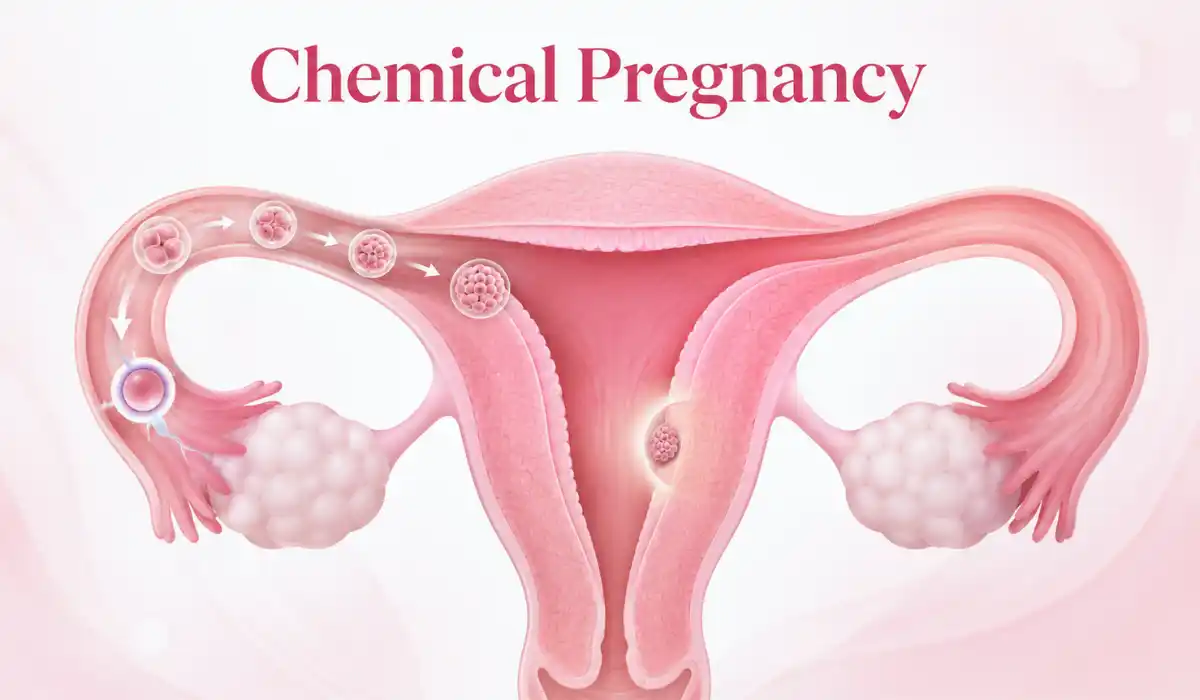
A chemical pregnancy is a very early pregnancy loss that usually happens before the fifth week of pregnancy. It occurs after implantation has started and the body has produced enough human chorionic gonadotropin, or hCG, to create a positive pregnancy test result.
The pregnancy stops developing before it can usually be seen on an ultrasound. Some people discover the loss after receiving a positive test followed by a negative one. Others may simply experience what seems like a slightly late or heavier menstrual period and never realize they were pregnant.
Why Is It Called a Chemical Pregnancy?
The word “chemical” does not mean the pregnancy was caused by medication, household chemicals or something the pregnant person touched. It refers to the fact that the pregnancy was identified through chemical evidence the hCG hormone detected by a urine or blood test rather than through an ultrasound.
A chemical pregnancy may also be called a biochemical pregnancy. Because it happens so early, an ultrasound generally cannot yet show a gestational sac or embryo inside the uterus.
What Causes a Chemical Pregnancy?
In many cases, the exact cause cannot be identified. Most early pregnancy losses are believed to happen because the developing embryo has chromosomal abnormalities that prevent it from growing normally. These changes usually occur by chance during fertilization and are not caused by ordinary daily activities.
Other possible contributing factors may include problems with implantation, structural differences in the uterus, certain untreated health conditions or hormonal issues. However, having one chemical pregnancy does not automatically mean that a person has a fertility problem.
Exercise, working, having sex or experiencing normal levels of daily stress generally do not cause an early miscarriage.
Signs of a Chemical Pregnancy
Symptoms are often mild because the loss happens shortly after implantation. Possible signs include a positive home pregnancy test followed by a negative result, a menstrual period that arrives later than expected, heavier bleeding than usual and mild lower abdominal cramping.
Some people may pass small blood clots or notice that early pregnancy symptoms, such as breast tenderness or nausea, suddenly decrease. However, symptoms alone cannot confirm a chemical pregnancy. Bleeding and cramping may also happen in a continuing pregnancy or with an ectopic pregnancy.
Can You Have a Chemical Pregnancy Without Knowing?
Yes. Many chemical pregnancies happen before a missed period or before someone decides to take a pregnancy test. The bleeding may begin around the expected period date and may not appear noticeably different from normal menstruation.
Modern pregnancy tests can detect low hCG levels early, so chemical pregnancies are now more likely to be identified than they were when tests were less sensitive.
A chemical pregnancy may sometimes be confused with a cryptic pregnancy, but the two are different. A chemical pregnancy is a very early pregnancy loss, while a cryptic pregnancy continues developing without being recognized for several weeks or months. In both situations, mild symptoms or unexpected bleeding may delay awareness.
How Is It Diagnosed?
A healthcare professional may suspect a chemical pregnancy when an early pregnancy test is positive but later becomes negative. Blood tests can measure the amount of hCG and determine whether the level is rising or falling.
During a normally developing early pregnancy, hCG generally rises. After a chemical pregnancy, the hormone level falls until it returns to its nonpregnant range. An ultrasound may show no pregnancy because the loss occurred before the gestational sac became visible.
A healthcare provider may also consider other causes of early pain, bleeding or unusual hCG changes. For example, heterotopic pregnancy involves one pregnancy inside the uterus and another developing outside it. Although rare, it requires urgent assessment because an ectopic pregnancy can rupture even when an intrauterine pregnancy has already been confirmed.
Does a Chemical Pregnancy Require Treatment?
Most chemical pregnancies resolve without medication or surgery. The body usually passes the early pregnancy tissue naturally, and bleeding may resemble a menstrual period.
A healthcare provider may recommend follow-up pregnancy tests or blood tests until hCG returns to normal. Medical treatment may be needed when bleeding is unusually heavy, tissue remains in the uterus or another condition is suspected.
When Should You Seek Urgent Medical Care?
Contact a healthcare professional whenever you experience bleeding or significant pain after a positive pregnancy test. Seek urgent medical help for severe or one-sided pelvic pain, shoulder pain, fainting, extreme dizziness, fever or very heavy bleeding.
These symptoms may indicate serious blood loss, infection or an ectopic pregnancy rather than an uncomplicated chemical pregnancy. Pregnancy-related pain and bleeding should not be self-diagnosed.
Can You Become Pregnant Again?
Most people who experience a chemical pregnancy later have a healthy pregnancy. One very early loss does not usually reduce fertility or mean that future miscarriages will occur.
Ovulation can return quickly after an early pregnancy loss. Ask your healthcare provider when it is medically appropriate to try again, particularly if you have ongoing bleeding, an underlying medical condition or emotional concerns.
Recurrent pregnancy loss as two or more miscarriages and recommends a physical examination and testing after two losses. Repeated chemical pregnancies should therefore be discussed with an obstetrician, gynecologist or fertility specialist.
Emotional Recovery After an Early Loss
A chemical pregnancy may happen early, but the emotional effect can still be significant. Someone may feel sadness, confusion, disappointment or grief, especially after trying to conceive or undergoing fertility treatment.
There is no correct way to respond. Speaking with a partner, trusted friend, healthcare professional or counselor may help. Support is particularly important when grief affects sleep, concentration, daily responsibilities or emotional well-being.
Final Thoughts
A chemical pregnancy is a genuine pregnancy loss, even though it happens before an ultrasound can show the pregnancy. It is usually identified through changing pregnancy test results, early bleeding and falling hCG levels.
Most people recover physically without treatment and can become pregnant again. However, severe pain, fainting, fever or heavy bleeding requires prompt medical attention.
FAQs
A chemical pregnancy usually occurs before the fifth week, shortly after implantation and before the pregnancy can normally be confirmed through an ultrasound examination.
Bleeding may last several days and often resembles a menstrual period. Contact a healthcare provider if it becomes very heavy, prolonged or increasingly painful.
Yes. A test may remain positive briefly while hCG is still present. Results become negative as the hormone gradually returns to its nonpregnant level.
No. A chemical pregnancy is a very early loss. An ectopic pregnancy implants outside the uterus and can cause dangerous internal bleeding without treatment.
No. One chemical pregnancy does not normally indicate infertility. Many people conceive again and experience healthy pregnancies after a single very early pregnancy loss.
Most chemical pregnancies cannot be prevented because they commonly involve random chromosomal problems. Managing health conditions and receiving preconception care may support overall pregnancy health.